Nothing to See Here | National Endowment for the Arts
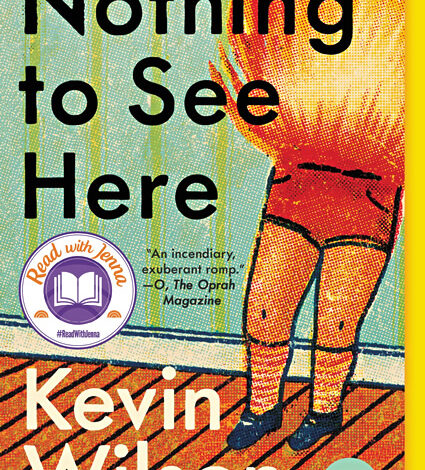
Kevin Wilson wrote the manuscript for hisbestselling novel, Nothing to See Here,in just ten days. “My wife is a writer too and a couple times a year, one of us will stay home with the kids for ten days while the other rents a cabin or does a residency,” Wilson told the New York Times. These cadences of writing—short bursts of intensity—allow him more time to spend with his two sons, Griff and Patch, who inspire much of his writing about love and family. Since his own childhood, Wilson has held family close to his heart. As a teenager, he and his sister played canasta with his parents every Friday night: an earnest rebuttal to adolescent cynicism. They spent a lot of their time together. But there was still a tension that existed as he grew up, a part of himself he hid from his family. “I’ve always had this kind of agitation and looping thoughts and small tics,” he recounted in an interview with NPR. “Falling off of tall buildings, getting stabbed, catching on fire—they were these just quick, kind of violent bursts in my head…[my family] loved me and still love me, but when you’re a kid, you’re not certain. You don’t know what’s the tipping point. So I hid it.”
It wasn’t until he was diagnosed with Tourette’s syndrome as an adult that he began to understand these looping thoughts. At first, he was skeptical about his diagnosis. Tourette’s is a neurological disorder often characterized by involuntary vocal or motor tics, and media representations of people with Tourette’s syndrome primarily showed externalized symptoms. Wilson’s experience, however, was much more internal. Growing up, he became familiar with the way these patterns of agitation sat in his body and mind; he knew how to live in their company and found that the process of creating a story helped to ground him in the world. “Writing is, I think, the thing that saved me—being able to transfer what was in my head onto the page. There’s this freedom that once it…goes out into the world and you publish it, you’re kind of free of it for a little while—at least it’s somebody else’s problem” (NPR).
These days, Wilson lives in Sewanee, Tennessee, with his wife, the poet Leigh Anne Couch, and their sons. There, he writes and teaches as an associate professor in the English Department at Sewanee: The University of the South. He is the author of two other novels, The Family Fang (Ecco, 2011) and Perfect Little World (Ecco, 2017), along with two short story collections: Tunneling to the Center of the Earth (Ecco/Harper Perennial, 2009), which received an Alex Award from the American Library Association and the Shirley Jackson Award, and Baby You’re Gonna Be Mine (Ecco, 2018). When he is not teaching or writing, he spends long hours with his children rambling through the mountains of Tennessee, exploring their backyard pond, watching old WrestleManias, hiking through the woods and “searching for frogs and lizards, for all the living things moving around us, unseen unless you try to find them” (LA Review of Books). When Wilson writes about parenthood, he captures this unseen: the aliveness of childhood curiosity, the fierce gratitudes of parenting, the terrible and wonderful uncertainties of love. “You can’t anticipate what your children are going to do or what the problems are going to be,” he told the New York Times. “You love them, so you attack it head on and go forward.”
Source link